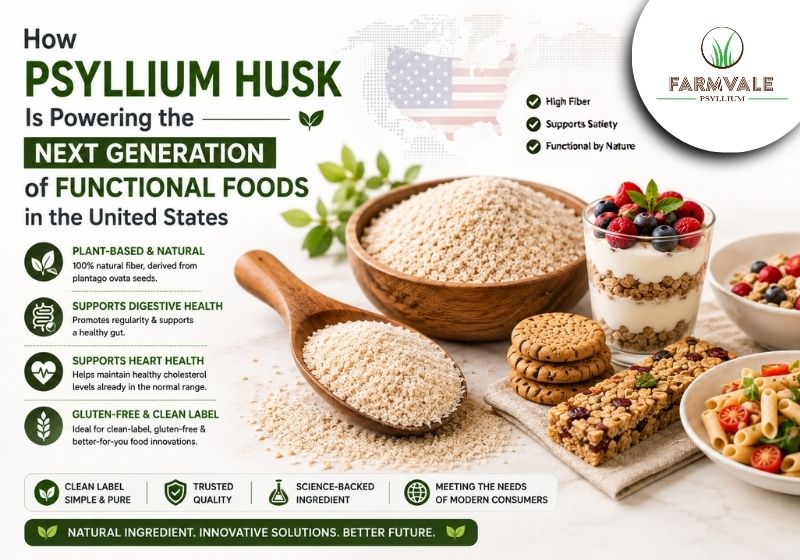
How Psyllium Husk Is Powering the Next Generation of Functional Foods in the United States
Psyllium husk offers strong potential for U.S. functional-food innovation because it combines a naturally high fiber profile with useful formulation properties. Product developers can explore it in bakery products, snacks, breakfast foods, beverages, and other products targeting fiber-rich, wellness-oriented, and clean-label positioning. The finished formulation must meet applicable U.S. regulatory and labeling requirements.
Why the U.S. Functional Food Market Is Growing
The U.S. functional food category is benefiting from consumer interest in nutrition, wellness and foods that offer benefits beyond basic nourishment. Market research projects continued growth in the U.S. functional foods market, while current U.S. dietary guidance emphasizes whole, nutritious foods and reducing highly processed dietary patterns.
Why Psyllium Fits the Functional-Food Trend
Psyllium provides dietary fiber and can contribute water-binding and textural functionality in appropriate formulations. This combination makes it relevant to developers working on fiber-forward products that need more than a simple ingredient-list story.
Digestive Wellness and Fiber Demand
Digestive health remains an important consumer theme, and fiber plays a central role in many gut-health product concepts. In the U.S., the FDA Daily Value for dietary fiber is 28 grams per day, while the Nutrition Facts label generally considers 20% Daily Value or more a high value. Final claims depend on the finished product and applicable regulations.
Where U.S. Manufacturers Can Use Psyllium
- Bakery: breads, gluten-free products, crackers and other baked goods.
- Snacks: bars and fiber-forward snack formats.
- Breakfast: cereals, granola and nutrition-focused blends.
- Beverages: powdered mixes and selected functional beverages where hydration and sensory performance are validated.
- Other functional foods: selected yogurt, plant-based and nutrition products where psyllium’s fiber and functional properties fit the formulation.
Clean Label and Ingredient Transparency
U.S. consumers increasingly examine ingredient lists, while food innovation continues to emphasize naturalness and recognizable ingredients. Psyllium can support a simple ingredient story, but brands should define their own clean-label standard and ensure that all ingredient and benefit claims are compliant.
What U.S. Buyers Should Look for in a Psyllium Supplier
A qualified supplier should offer consistent specifications, lot-level quality documentation, traceability, appropriate food-safety systems, reliable packaging and export capability. Buyers should also evaluate particle size, hydration performance, microbiological quality and contaminant controls according to the intended application.
Farmvale Psyllium
Farmvale Psyllium supplies psyllium ingredients to international markets and can support U.S. buyers with product specifications and export documentation. Product selection should be matched to the finished formulation, intended claim strategy and U.S. regulatory requirements.
Frequently Asked Questions
Why is psyllium husk used in functional foods?
Is psyllium popular in the U.S.?
What is the U.S. Daily Value for dietary fiber?
Can psyllium be used in gluten-free foods?
How do I choose a psyllium supplier for the USA?